This article contains affiliate links. If you buy through them, I may earn a commission at no extra cost to you. As an Amazon Associate I earn from qualifying purchases.
I use both a Lelit Bianca V3 and an aluminium-boiler Gaggia Classic with Gaggimate Pro. Some days I prefer changing the shot with the Bianca’s paddle. On others, I enjoy choosing a profile on the Gaggia and letting it run. I would be happy keeping either, but making several milk drinks is where I most appreciate the Bianca.
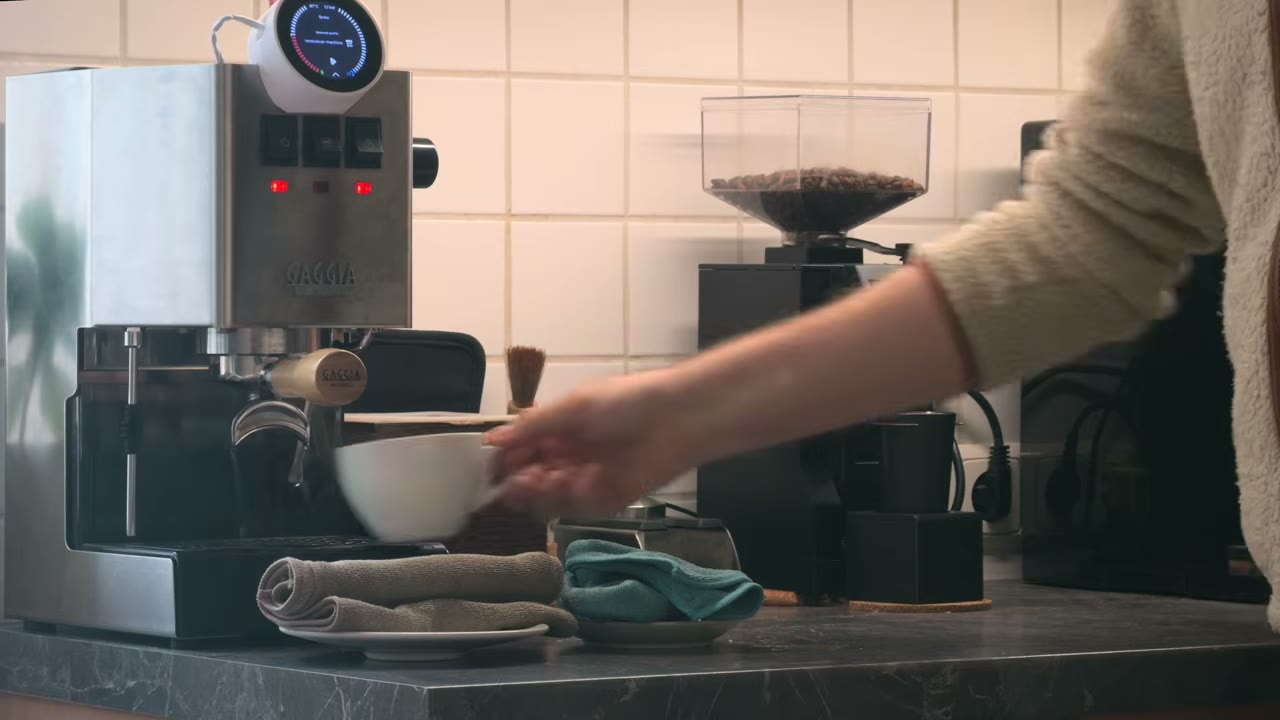
This article follows my comparison video. The photos are frames from that video. The title image shows my Gaggia and grinder at 4:35.
This is my account of using both machines. At 10:01, I say I still want to film a direct comparison with temperature measurements and shots tasted side by side. The video contains no such measurements or blind tasting.
The differences that matter in my routine
| Question | My Gaggia with Gaggimate | My Lelit Bianca V3 |
|---|---|---|
| How do I control a shot? | Choose or edit a saved profile | Adjust the flow with the paddle during the shot |
| Warm-up time I quote in the video | 10 to 15 minutes | 20 to 25 minutes |
| Two cappuccinos | Pull espresso, then steam; this works for me | Comfortable workflow with separate boilers |
| Four cappuccinos or guests | Possible, but the sequence gets tiring | My preference for repeated brewing and steaming |
| What am I maintaining? | A small single-boiler machine and a DIY electronics mod | The E61 group and a dual-boiler machine |
| Approximate machine budget quoted in the video | €600 including the mod | Almost €2000 |
The prices are my estimates in the video, not current offers or a complete shopping list. In my six-month Gaggimate review, I give a different example budget of about €735 including a bottomless portafilter and precision basket. Use the individual components when comparing costs for your own setup.
Paddle in my hand or a profile on the screen
At 2:01, I describe the different ways of controlling the shot. With the Bianca, I watch the espresso and move the paddle as it runs. I also like operating the group lever to start and stop brewing. Those physical controls are a large part of why I enjoy using it.
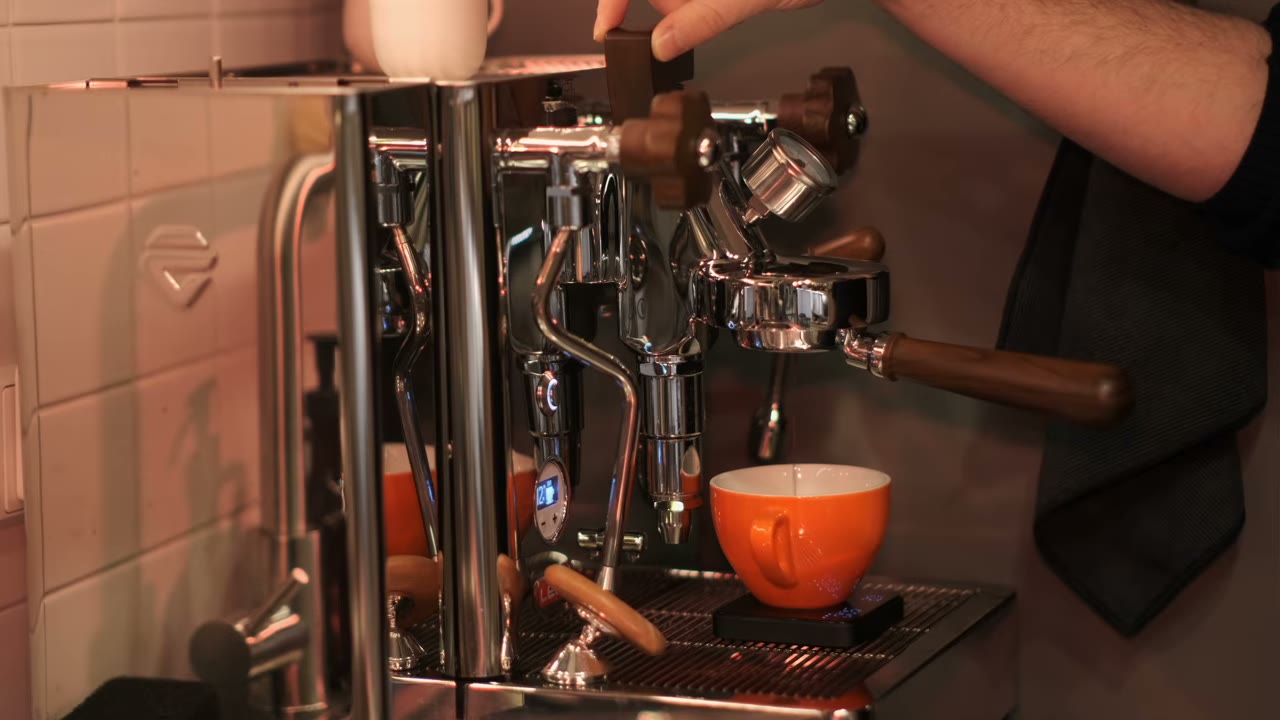
With Gaggimate, I decide more of that beforehand. I choose a profile, think about the temperature for the coffee, or try a profile shared by another user. At 9:26, I explain why that process interests me as much as the Bianca’s manual control.
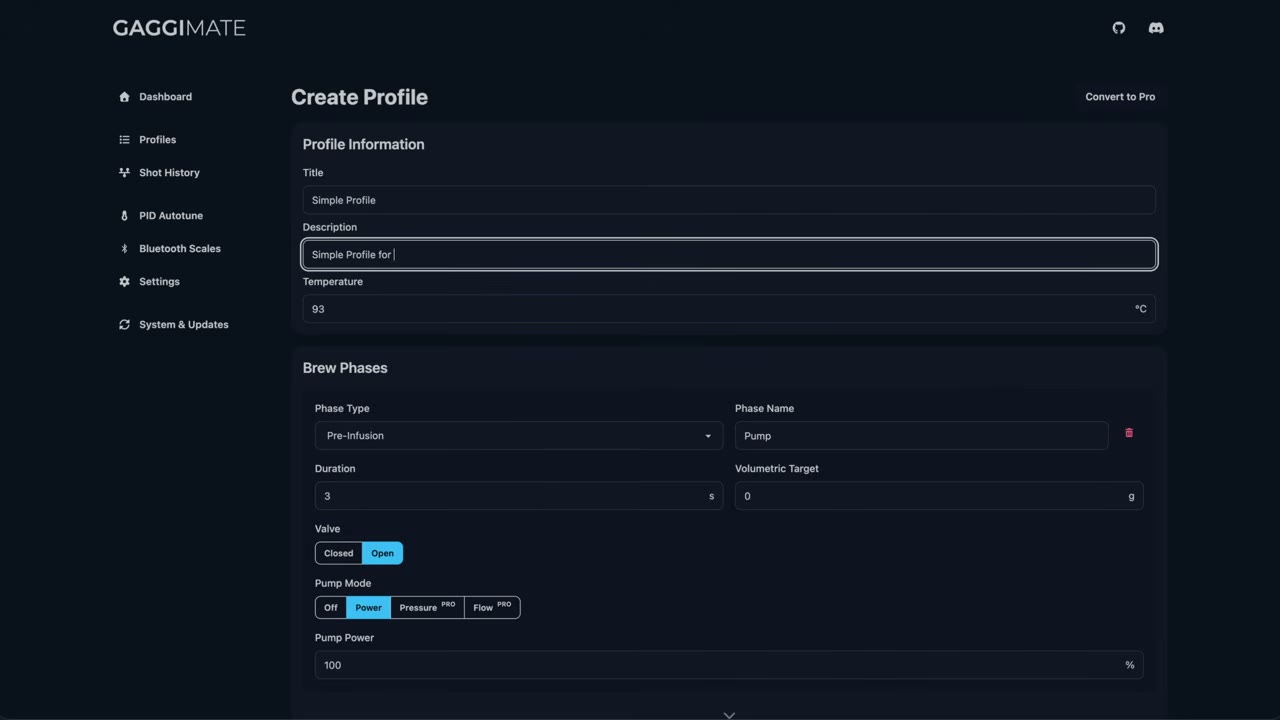
The distinction I make at 2:35 matters: the Bianca paddle restricts flow, which also affects pressure. Gaggimate Pro can regulate the pump toward a pressure target using its pressure sensor. The official profile documentation identifies that pressure control as a Pro feature.
A saved profile lets me reuse the same settings. It does not guarantee the same taste every time. Beans, grind, dose, and preparation still affect the result.
Warm-up and the small boiler
At 3:17, I quote 10 to 15 minutes for my Gaggia and 20 to 25 for my Bianca. That affects which one I reach for when I want a spontaneous espresso before leaving home. I also mention scheduling the Bianca with a smart plug.
These are my warm-up times as quoted in the video, rather than a test of when water temperature at the puck becomes stable.
At 1:03, I explain the Gaggia’s quick response to temperature settings through its small thermal mass.
The small boiler also remains a limit. In my six-month review, I describe cold refill water affecting longer shots and why I would consider a larger boiler for very light roasts. Gaggimate adds useful control to my Classic; it does not turn it into the Bianca’s boiler system.
Two cappuccinos and a round for guests
At 5:03, I give the example that best describes my Gaggia workflow: pull a double espresso, then make two cappuccinos. That works well for me. Reversing the sequence or making four cappuccinos in succession is possible, but I find it tiring.
For several milk drinks and repeated brewing and steaming, I prefer the Bianca. Its separate boilers make that routine easier for me. That convenience is a stronger reason for the extra spending than expecting every espresso to taste dramatically better.
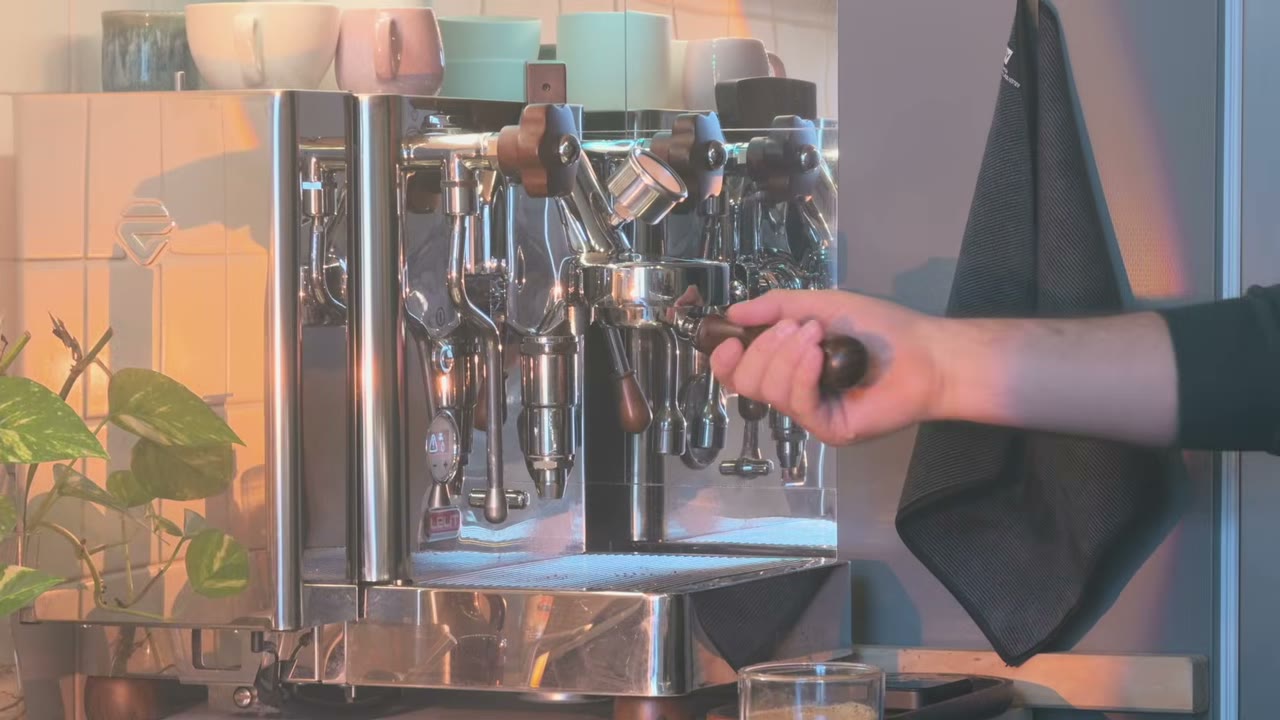
In the Gaggimate long-term review, I explain how Steam Assist helps me steam enough milk for two cappuccinos together. That improves my single-boiler routine, while the Bianca remains my choice for a larger round.
Cleaning and owning a mod
At 3:43, I compare Gaggimate’s backflush programs with the Bianca’s manual cycles and E61 care. The automated program handles the sequence. The blind basket, cleaner, and rinse are still jobs I have to do; the Gaggimate guide describes those steps too.
I also enjoy knowing the machine I modified. That includes looking after the electronics. My six-month review describes a failed board, troubleshooting, and a replacement from support. I would include that experience when deciding whether the DIY route suits me, alongside the software features and lower machine budget.
The Bianca feels more substantial to me, with its E61 group, metalwork, and rotary pump. I like that material feel, along with the wood accents.
How close is the espresso?
At 6:23, I say the espresso is closer than the prices suggest, especially with medium and darker roasts. That is my everyday impression, especially for the roasts I usually enjoy on the Gaggia.
I enjoy the espresso from my Gaggia. The extra money for the Bianca buys a milk-drink workflow and a style of control that I appreciate. Whether I could reliably tell matched shots apart in a blind tasting is a question this video leaves open.
Which I would keep
Near the end of the video, I say I am often unsure which I prefer. I mean it. For guests and several milk drinks, I would keep the Bianca. For a compact setup where I want to experiment with software and profiles, I would keep the Gaggia with Gaggimate.
If you are still deciding on the mod, start with my six-month experience. For the weighing and shot-stopping part of the workflow, read my Bookoo and MyScale comparison.
Product links and my setup
- Lelit Bianca V3
- Gaggia Classic Evo Pro plus the Gaggimate kit
- Eureka Mignon Specialità
- Bookoo Themis Mini scale
- IMS 58 mm basket
- Bottomless portafilters for the Bianca (E61) and the Gaggia
My experience here is with my own aluminium-boiler Classic and the equipment shown in the video. Check the machine version and matching mod kit when using the product links. The full equipment list is on my setup page.