This article contains affiliate links. If you buy through them, I may earn a commission at no extra cost to you. As an Amazon Associate I earn from qualifying purchases.
For my Gaggimate, the €15–20 MyScale does the job I need: weighing beans and reporting the cup weight so the machine can stop the shot. I prefer the roughly €100 Bookoo Themis Mini when I also want fast feedback for hand pouring, tiny quantities, or logging shots with my Lelit Bianca.
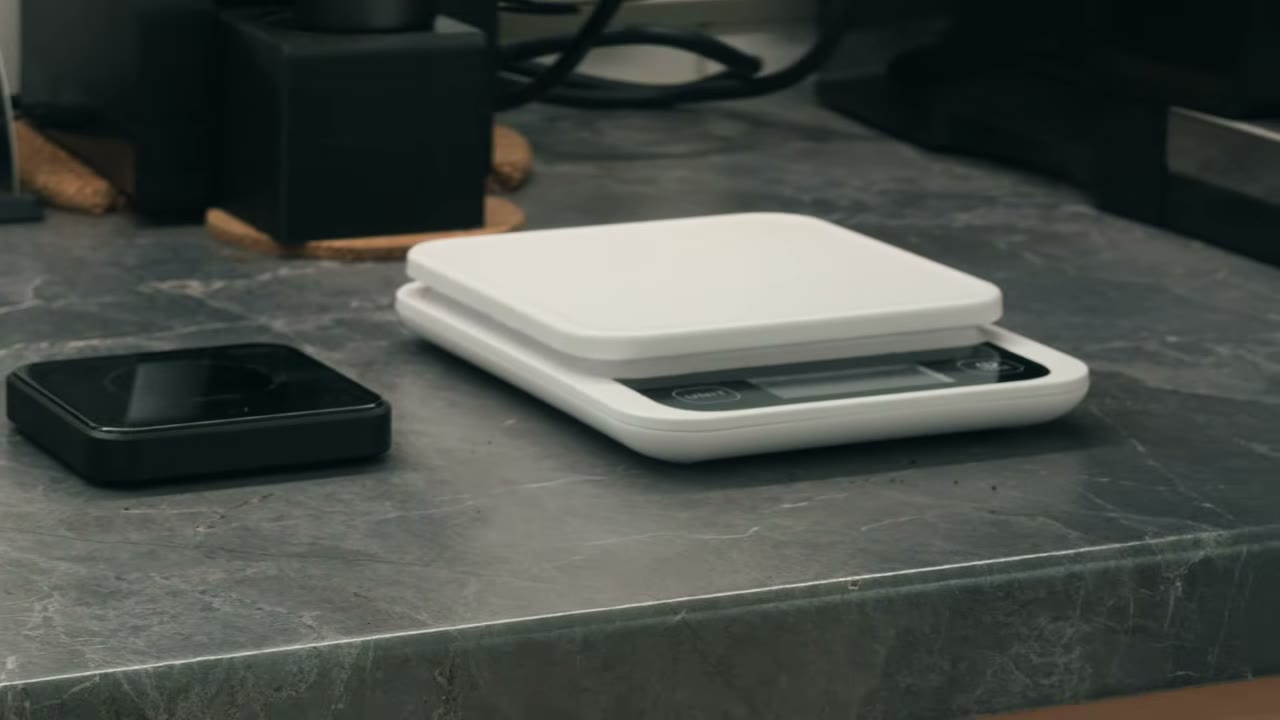
Those are the prices I quote in my comparison video, not current offers. I used both scales with my Gaggimate and had already been using the Bookoo with the Bianca. The images in this article are frames from that video.
What I compared at home
I compared how quickly the scales respond, what happens when I add beans one by one, their readings side by side, and automatic stopping with Gaggimate. I did not measure Bluetooth latency in milliseconds or establish absolute accuracy with a calibrated weight. This is the experience with my two units.
| What matters | Bookoo Themis Mini | MyScale |
|---|---|---|
| Gaggimate connection | Connected by Bluetooth | Connected by Bluetooth |
| Response in my use | Faster feedback | Noticeable delay |
| Controls and modes | Weight with timer, flow-rate mode, automatic tare and timer | Weight display; no separate espresso timer or flow mode |
| Slow, tiny additions | Registered individual beans | Several slowly added beans still read zero |
| Power | USB-C rechargeable; one to two months between charges in my use | Replaceable batteries |
| Size | About 8 × 8 cm and 1.5 cm high | Larger platform, useful for two cups |
| My choice | Pour-over, small quantities, and use with the Bianca | A budget scale dedicated to Gaggimate |
The bean test: MyScale kept showing zero
The most revealing difference was not a normal espresso dose. It was adding beans very slowly. I placed them on the MyScale one at a time, and the display kept showing zero. When I removed them together, it jumped to −0.7 g. I describe that observation at 5:57.
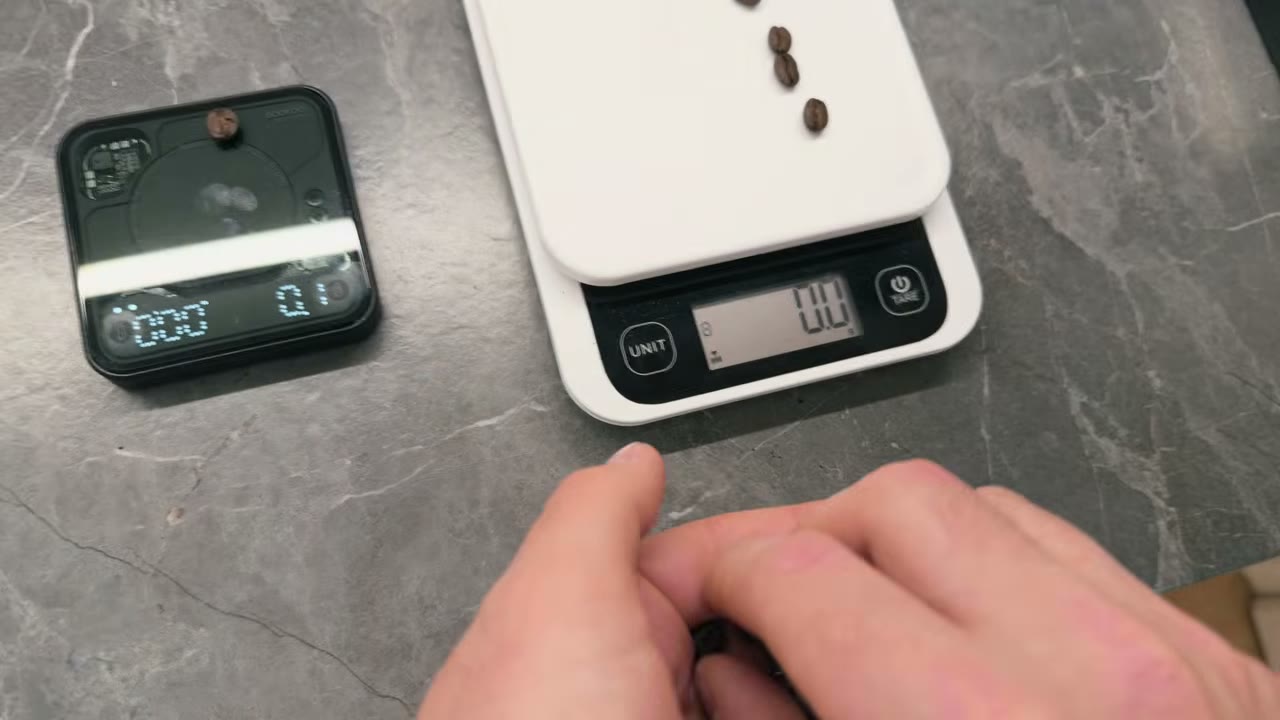
My explanation in the video is aggressive auto-tare or drift compensation. That is an interpretation of the behaviour, not a firmware analysis. The useful buying distinction is simpler: I would not choose this unit for adding a few tenths of a gram of yeast, salt, or spices slowly.
An 18 g dose poured onto the scale in one go registered reliably in my use. That is why I can still recommend it for my coffee workflow. The Bookoo was more useful for single beans and other small additions.
Automatic stopping: the third run worked for me
The MyScale reacted more slowly, both directly and over Bluetooth. When pouring by hand, I sometimes overshot while waiting for the display to catch up. For filter coffee I prefer the quicker Bookoo.
With Gaggimate, the machine provides the timer and can account for the scale’s delay. At 5:17, I report that the first two automatic runs were slightly off and the third reached the target I wanted. I do not give the first two errors in grams in this video. Three runs are my experience, not a fixed calibration requirement for every setup.
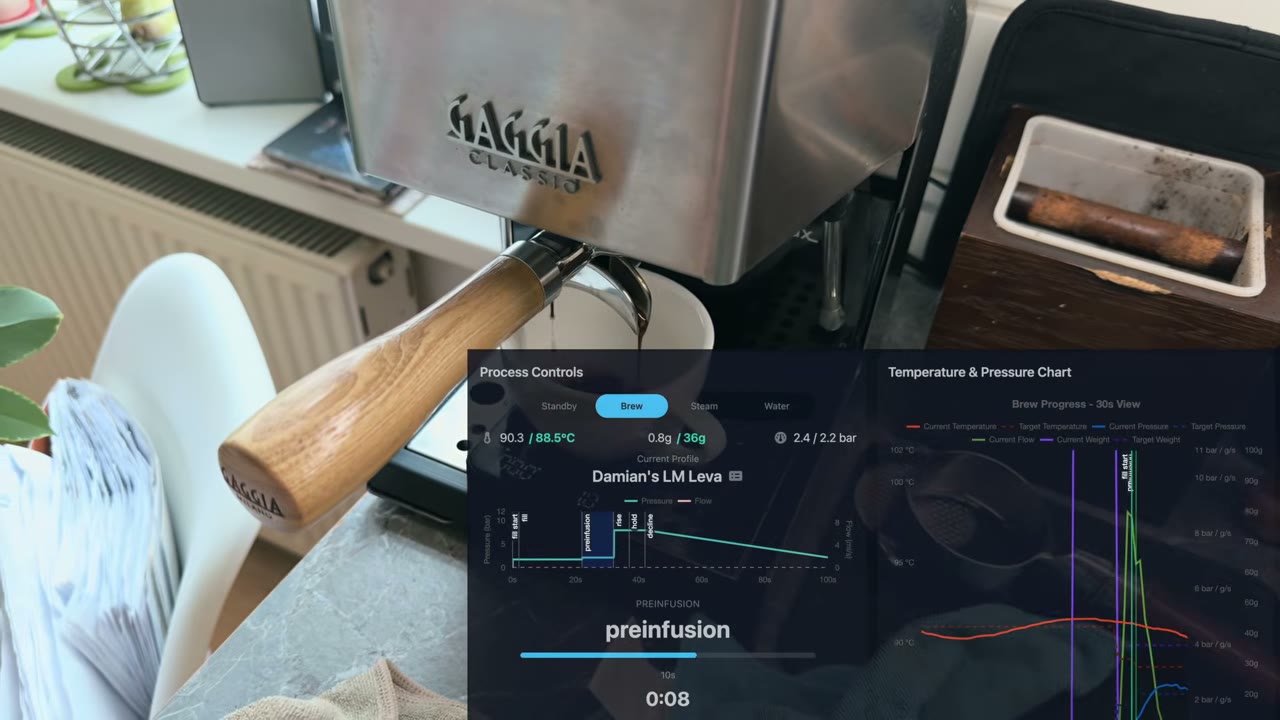
The missing timer on the MyScale does not bother me under this machine, because I use Gaggimate’s timing. Away from Gaggimate, that missing feature matters more. If you want to see the connection process, I also made a MyScale practical test and a Bookoo connection video.
A 0.1 g difference does not establish accuracy
At 6:29, I discuss a difference of about 0.1 g between the scales. Comparing one scale with another does not tell me which is right. For that, I would need a known reference such as the calibrated 100 g weight I mention in the video.
The difference did not change my buying decision for espresso. I am reporting the readings I saw, not a certified accuracy result. The Bookoo’s 0.1 g display increments and its detection of small additions are useful, but display resolution and absolute accuracy are different questions.
What I get for the Bookoo’s extra cost
The Bookoo is compact, weighs around 140 g, and has a stated capacity of 1 kg. I recharge it by USB-C; in my use a charge lasts about one to two months. Its timer mode displays time and weight, its flow mode displays flow rate, and its automatic mode tares the cup and starts timing with the first drops.
I use its Bluetooth connection and apps such as Beanconqueror with the Lelit Bianca to log shots and compare curves. With Gaggimate, the machine already does much of that work. A flow curve helps me compare a shot’s behaviour, but it does not by itself establish where or whether channeling happened.
At 3:05, I also describe Gaggimate’s stainless-steel tray with a cutout for the Themis Mini. That can make better use of the height under the Gaggia’s portafilter. The larger MyScale platform is useful if you want two cups side by side, so small size is not an advantage for every routine.
Which I would buy
For a scale that stays under a Gaggimate-equipped Gaggia, I would buy the cheaper MyScale if I could accept the slower response and battery changes. My bean and shot tests explain why I do not need the premium scale for that job.
For pour-over, tiny quantities, and use across both of my machines, I would choose the Bookoo Themis Mini. The extra cost buys things I actually use away from Gaggimate.
If you are still deciding on the mod, read my six-month Gaggimate review.