This article contains affiliate links. If you buy through them, I may earn a commission at no extra cost to you. As an Amazon Associate I earn from qualifying purchases.
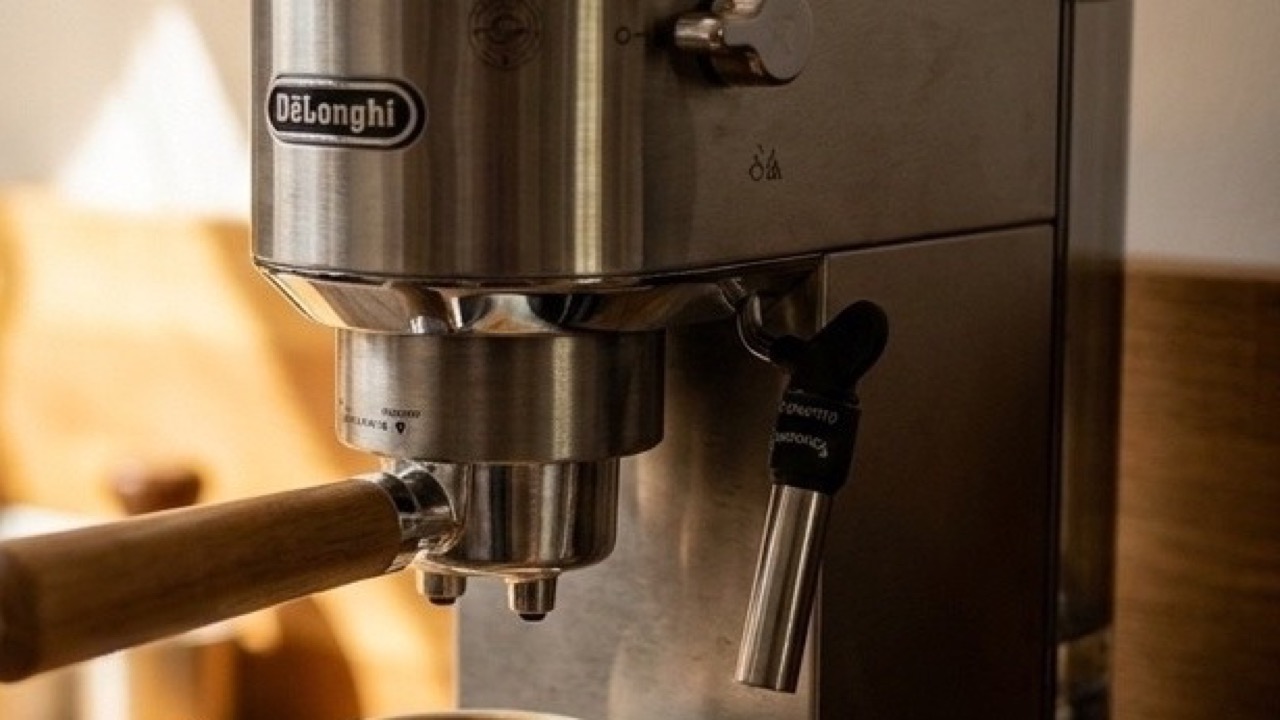
The DeLonghi Dedica Style can be the best decision for your start in espresso, or the most frustrating one. The difference isn’t the machine. It’s a part most people don’t want to spend money on.
I bought mine about ten years ago as my first machine. Yes, it still works. Back then I was pretty frustrated, because there was too little good content around, and it took me a long time to understand what I was doing wrong.
Quick answer
Yes, the Dedica is still a good starter machine if you know what you’re buying. It’s small, affordable, and uncomplicated. Temperature is its biggest weakness, and steam and workflow have limits. The real trap isn’t the machine. It’s putting your whole budget into the machine and then saving on the grinder. If you’re also looking at the Gaggia Classic, my Dedica vs Gaggia Classic comparison puts both side by side.
What the Dedica does well
It’s small, it looks good, it doesn’t cost a fortune, and it fits in any kitchen. It heats up in under a minute. If you’re coming from capsules, a bean-to-cup machine, or filter coffee, it feels like a huge upgrade, without the downsides of a big boiler machine that needs 30 minutes to heat up.
That feeling isn’t wrong. You get fresher beans, more influence over the result, and a small morning ritual, without putting €1000 into a hobby you don’t know is yours yet.
I think that often gets forgotten in talk about beginner setups. Not everyone wants to set temperature profiles, measure water, and try ten different baskets right away. Some people just want a decent cappuccino in the morning, or an espresso that beats the capsule. The Dedica can do that. If you have little space, a limited budget, and want to find out whether espresso grabs you at all, it’s one of the most sensible machines you can buy.
Spend on the grinder first
Here’s the part most buying guides leave out. The machine is only one part of the setup, and on the Dedica you see that faster than on almost any other machine. The most important part is the grinder.
I know that isn’t the exciting answer. The machine shines and makes steam, and the grinder is the thing you don’t want to pay for. But espresso is merciless here. A Dedica with fresh beans and a suitable grinder goes further than most people think, and you can hold back any better machine with old pre-ground coffee.
Plan at least as much for the grinder as for the machine in this price range, ideally a bit more. The Dedica cost around €120 when I made the video, so that means:
- A good hand grinder that grinds fine enough for espresso starts at about €100 to €150.
- An electric single-dose grinder started at about €250 when I made the video. Since then I’ve tested the Geimori GU38, which costs less.
That sounds like a lot next to a €120 machine, but that’s the point. A cheap machine plus a grinder that can’t grind fine and evenly enough just isn’t a good espresso setup. You start doubting the tamper, the basket, the coffee, and the machine, when the problem started much earlier, in the grinder. That was my mistake for a long time.
Pressurized or single-wall baskets
The Dedica comes with pressurized baskets. They have a chamber that creates resistance artificially, even when the coffee doesn’t. They aren’t automatically bad. They make the start easier, especially with pre-ground coffee, because you quickly get something in the cup that looks like espresso, with plenty of crema. For many people that’s exactly right.
The catch is that lots of crema doesn’t automatically mean good espresso. A pressurized basket hides mistakes. That’s nice if you just want to drink coffee. But if you want to understand why a shot tastes sour, bitter, or simply boring today, it won’t get you far.
So I’d switch to a single-wall basket like the IMS 51 mm fairly soon. Not on day one, but as soon as you notice the topic has got hold of you. A single-wall basket is very honest. It shows you right away whether the grind is right, whether the coffee is fresh, and whether you work reasonably consistently. From there, your good grinder makes all the difference, and you’ll taste it.
What to buy after the grinder
A nice portafilter with a good single-wall basket and a good tamper. Please don’t use the plastic tamper in the box. The included portafilter is okay, but I don’t find it very nice. This is the point where the Dedica suddenly does much more than most people give it credit for.
New, a full Dedica setup comes to about €350 to €500, depending on whether you want a hand or an electric grinder. My list with everything you really need, including the basket and a scale, is on Amazon.
Where I won’t sugarcoat it
Temperature. Not because every coffee has to be set to the exact degree, but because you want repeatable results. You want to pull a shot, change one thing, pull the next, and understand what happened. On the Dedica that isn’t always easy. It’s a compact thermoblock machine at this price, and temperature stability isn’t its strength. If you pull several espressos in a row or switch between espresso and milk drinks, you quickly notice that the workflow isn’t as relaxed as on a bigger machine.
Steam. The Dedica Style’s wand is okay for a morning cappuccino, but it doesn’t have the power for silky milk foam one drink after another.
That doesn’t mean the coffee is bad. You have to get to know the machine, let it heat up, find a repeatable routine, and not expect it to behave like a machine that costs five times as much.
How to judge it fairly
The Dedica often gets judged unfairly because some people expect the last machine they’ll ever need. It isn’t. It’s a start, and as a start it can be really good. You can learn to buy fresh beans and use a scale. You can get into grind size, ratio, extraction, and steaming milk. In those respects it’s a real portafilter machine.
You also find out quickly whether this interests you for a few weeks, or whether you’ll one day watch videos about baskets, puck screens, and water hardness by choice. And when you upgrade, you take your most important purchase with you. You replace the machine. A good grinder stays.
Buy the Dedica as part of a setup, not as the complete solution.
If you’re stuck between this and the next step up, read Dedica vs Gaggia Classic. For the basics, I link good videos from Kaffeemacher in the video description. And the setup finder puts together a machine and grinder for your budget.